Remembering Isidro G. Bango Torviso
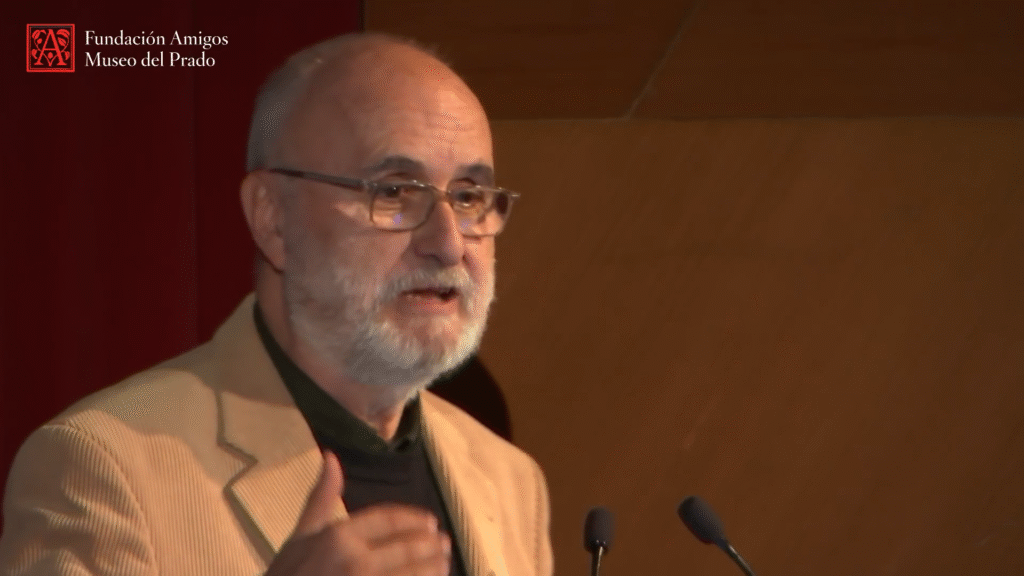
PHOTO: Video captured by Fundación Amigos Museo del Prado
Isidro G. Bango Torviso (Ferrol 1946-Madrid 2025) was a professor of History of Ancient and Medieval Art at the Autonomous University of Madrid. His most outstanding area of specialization was medieval architecture, approached from various perspectives: the history of construction, spatial functionality and contemporary historiographic interpretation. On these topics he published a fundamental reference work for the study of medieval Hispanic architecture.
Among the periods in which his contribution was most relevant, his studies dedicated to the architecture of the Early Middle Ages in the peninsula stand out and his contribution to the conceptual definition of what we know today as late Romanesque architecture.
This label encompassed the buildings built between the 12th and 13th centuries, initially conceived under the stylistic parameters of the Romanesque and completed within the Gothic, through the incorporation of ribbed vaults. This process necessarily involved the modification and adaptation of the structural supports to the new ways of conceiving these vaults.
In this context, Bango’s relationship with Lleida was particularly significant. In 1991 he participated as a speaker in the fundamental congress dedicated to the Seu Vella of Lleida, a meeting that completely transformed the academic vision of the whole. In his speech, Professor Bango demonstrated the fundamental role played by the Ilerden Cathedral in defining the peninsular Late Romanesque, identifying its two construction phases: the initial design of a Romanesque church with three naves with a monumental transept and a head of five aligned chapels, and its subsequent alteration during the work to adapt the pillars to the introduction of the new ribbed vaults, in line with emerging tastes.
Isidro G. Bango’s study of the Seu Vella marked a landmark in his bibliographic career and in his consideration within the history of art.
Eduardo Carrero Santamaría
Universitat Autònoma de Barcelona